
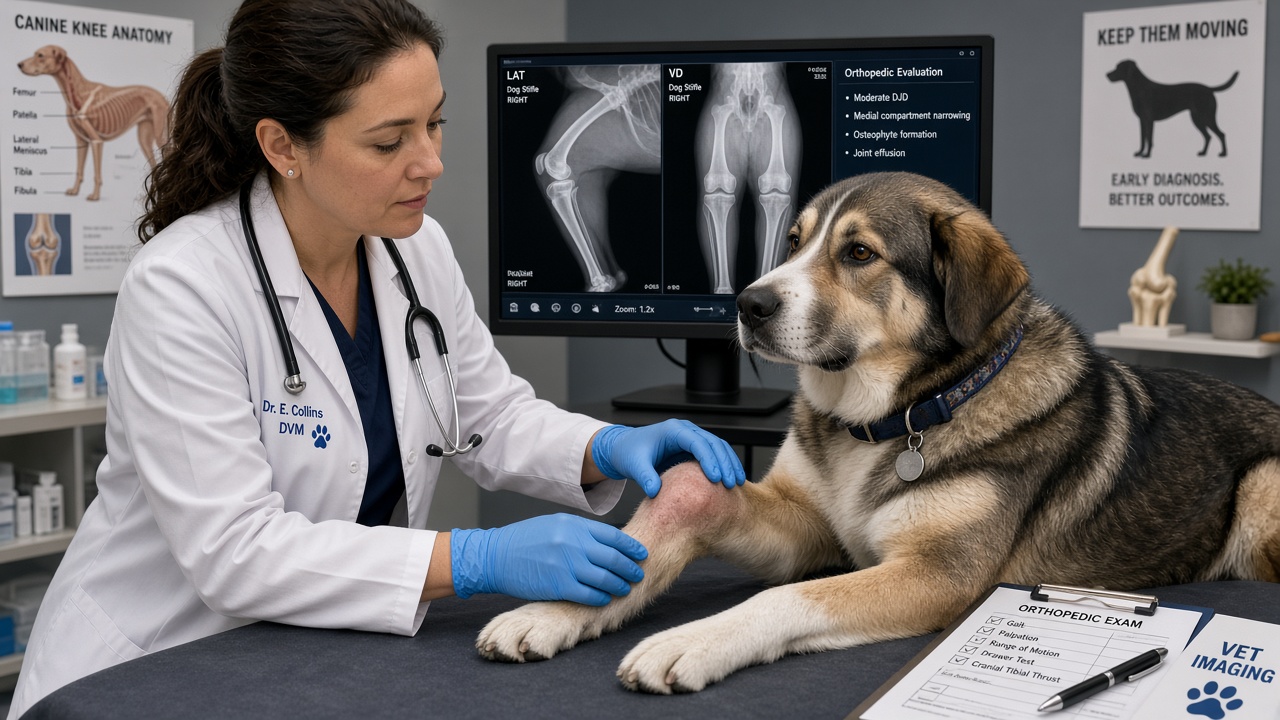
 TPLO surgery for dogs Virginia is an orthopedic procedure used to stabilize a dog’s knee after cranial cruciate ligament disease or rupture. Rather than replacing the damaged ligament, TPLO changes the mechanics of the knee so it can remain stable while bearing weight. Diagnosis, surgical planning, and structured recovery are all important parts of the process.
For Virginia dog owners, understanding the procedure before making a treatment decision can make conversations with a veterinarian or veterinary surgeon much more productive.
Why Cranial Cruciate Ligament Injuries Cause Lameness
The cranial cruciate ligament, or CCL, is one of the main stabilizing structures inside a dog’s knee, which veterinarians call the stifle joint. It performs a function similar to the ACL in people.
The American College of Veterinary Surgeons states that cranial cruciate ligament disease is one of the most common causes of hind-limb lameness, pain, and knee arthritis in dogs. The condition often develops gradually as the ligament degenerates rather than from one dramatic accident.
Common signs can include:
- sudden or recurring hind-leg limping
- reluctance to run, jump, or climb stairs
- difficulty rising after rest
- stiffness after exercise
- reduced weight bearing on one rear leg
- swelling around the knee
A limp should not automatically be assumed to be a cruciate injury. An orthopedic examination is needed because fractures, hip problems, patellar disorders, muscle injuries, and other conditions can cause similar signs.
How TPLO Surgery Changes the Dog’s Knee
TPLO stands for Tibial Plateau Leveling Osteotomy. It changes the geometry of the upper tibia so the knee can remain more stable even without normal CCL function.
The ACVS explains that TPLO involves making a curved cut in the upper tibia, rotating the tibial plateau to a planned position, and securing the bone with a plate and screws.
Virginia Tech likewise describes TPLO as a commonly used procedure for dogs with cranial cruciate ligament rupture. Its clinical research has examined whether modifications to the surgical approach could improve early weight bearing and resolution of lameness.
For owners researching tplo surgery for dogs virginia, the important point is that TPLO is not simply “repairing an ACL.” It changes knee biomechanics to reduce the instability created by the damaged ligament.
Which Dogs May Be Considered for TPLO?
Treatment decisions should be individualized. Dog size alone does not determine whether TPLO is appropriate.
The ACVS notes that treatment selection may depend on factors including:
| Factor | Why It Matters |
|---|---|
| Activity level | Highly active dogs place greater demands on the knee |
| Body size | Influences surgical and rehabilitation planning |
| Age | May affect overall treatment decisions |
| Knee instability | Helps determine treatment requirements |
| Skeletal conformation | Influences forces acting through the joint |
| General health | Important for anesthesia and recovery |
Cornell University’s orthopedic service notes that dogs of different ages and breeds can experience cruciate ligament tears and that surgical treatment is commonly used when the knee is unstable.
Pet owners in Southwest Virginia can also discuss orthopedic concerns with Town and Country Vet Blacksburg when deciding what evaluation and treatment pathway is appropriate for their dog.
What Happens Before TPLO Surgery?
Good surgical planning begins before the operation itself.
A veterinarian may use an orthopedic examination and radiographs to confirm knee instability and assess the joint. Blood testing may also be recommended before anesthesia.
Texas A&M veterinary specialists explain that preoperative X-rays help confirm the diagnosis and rule out other sources of pain, while postoperative imaging is used to assess implant positioning.
Owners should ask:
- What confirms that my dog has a CCL injury?
- Why is TPLO being recommended over other options?
- Who will perform the surgery?
- What complications should I understand?
- How long will activity be restricted?
- When are follow-up examinations and X-rays required?
TPLO Recovery Requires Owner Participation
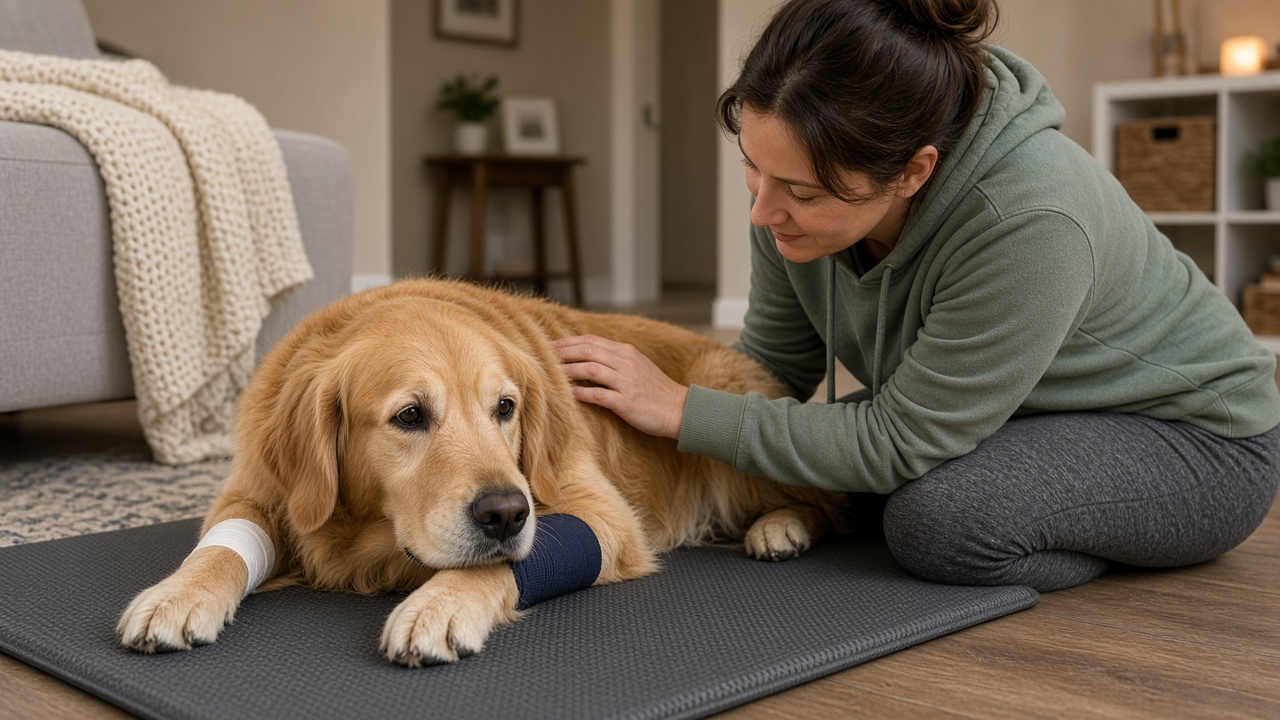
Surgery is only part of the treatment process. Recovery at home plays a major role in protecting the healing bone and implants.
Texas A&M advises that activity usually needs to be carefully controlled during the early recovery period. Short leash walks, confinement when unsupervised, incision monitoring, and preventing licking are among the measures commonly used after surgery.
The ACVS similarly notes that TPLO requires several weeks of restricted activity while the bone heals.
A Simple TPLO Recovery Checklist
- Follow medication instructions exactly.
- Prevent running and jumping.
- Use leash-only bathroom walks when instructed.
- Keep the incision clean and dry.
- Prevent licking with an appropriate protective collar.
- Attend every scheduled recheck.
- Report worsening swelling, drainage, pain, or lameness.
- Do not increase activity without veterinary approval.
Mistakes Owners Should Avoid
The most common mistake is assuming that a dog looks better before the surgical site is fully healed.
Dogs may begin using the leg relatively quickly, but improved walking does not mean the bone has completed healing. Allowing uncontrolled running, stairs, or jumping too early can increase the risk of complications.
Another mistake is skipping follow-up imaging. Veterinary teams use rechecks to assess bone healing and determine when activity can safely increase.
FAQs
What does TPLO stand for?
TPLO means Tibial Plateau Leveling Osteotomy, a surgical procedure that changes the biomechanics of a dog’s knee after cranial cruciate ligament failure.
Is a dog CCL tear the same as a human ACL tear?
They involve comparable stabilizing ligaments, but cruciate disease in dogs often develops through gradual degeneration rather than the sudden sports-related injury commonly associated with human ACL tears.
Does every dog with a CCL injury need TPLO?
No. The appropriate treatment depends on the dog’s size, activity, health, joint stability, anatomy, and individual circumstances. A veterinarian or veterinary surgeon should make the recommendation.
How long does TPLO recovery take?
Recovery occurs in stages. Activity is usually restricted for several weeks while the bone heals, and the veterinary team determines when exercise can safely increase.
What signs after surgery require veterinary attention?
Increasing lameness, unusual swelling, incision drainage, significant pain, or other unexpected deterioration should be reported promptly to the surgical team.
Conclusion
TPLO can provide stability after a serious canine cruciate ligament injury, but successful treatment requires accurate diagnosis, careful surgical planning, and disciplined rehabilitation.
For readers of 1400 Main Street, the practical takeaway is simple: understand the diagnosis, ask why a particular procedure is recommended, prepare your home for recovery, and follow the veterinary team’s restrictions even when your dog begins feeling better.